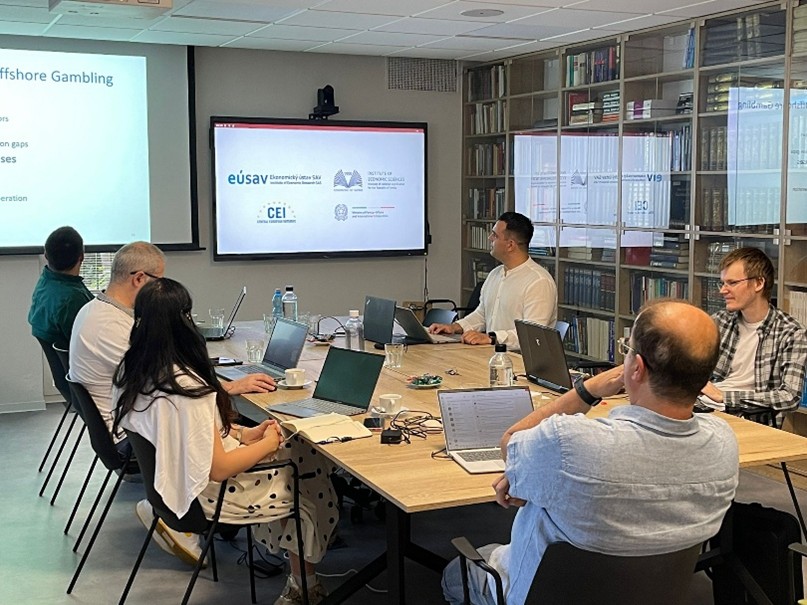
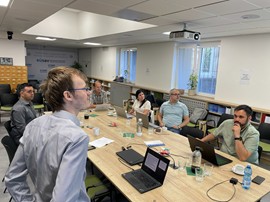
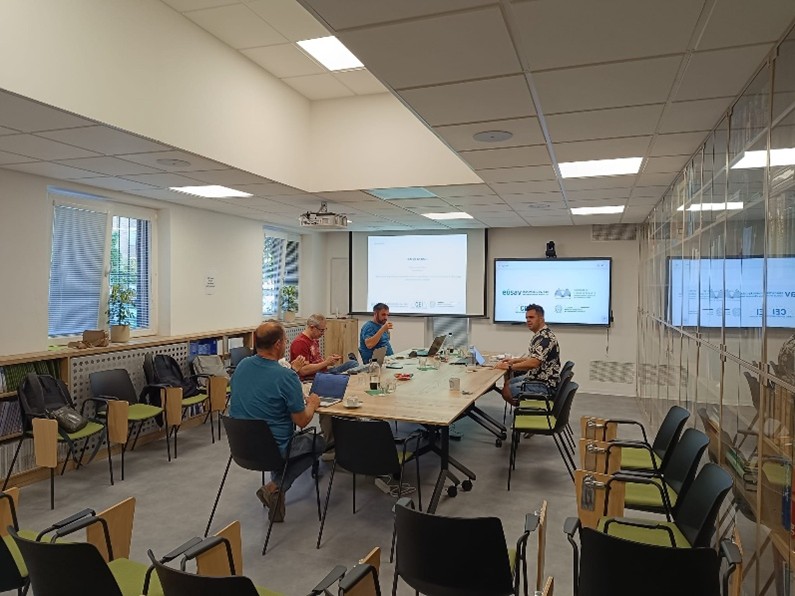
The Institute of Economic Research of the Slovak Academy of Sciences (IER SAS) successfully hosted the first methodological workshop of the project “CEI Support to Taxation Policy Knowledge Transfer: Strengthening Public Revenues through Evidence-Based R&D” from 27 to 29 May 2026 in Bratislava. The workshop was organized within the framework of the Central European Initiative (CEI) Know-how Exchange Programme (KEP) and brought together researchers from IER SAS and the Institute of Economic Sciences (IEN), Belgrade.
The three-day workshop marked the first major project activity aimed at transferring Slovak expertise in taxation policy modelling and evidence-based fiscal governance to Serbia. Four researchers from each partner institution participated in intensive methodological discussions, practical training sessions, and joint planning activities focused on taxation elasticity estimation and fiscal policy analysis.
The workshop programme was led by Ivan Lichner and Filip Ostrihon from IER SAS and covered advanced econometric approaches used in Slovakia and other countries for estimating taxation elasticities and assessing the revenue effects of excise duties and gambling taxation. Participants discussed methodological approaches currently applied in Slovakia, reviewed international examples of best practice, and examined their applicability to the Serbian context.
A key outcome of the workshop was the presentation and testing of a draft modelling framework based on Slovak data, together with the introduction of a backcasting methodology for constructing consistent long-term taxation datasets. Preliminary Serbian time-series data were also presented and discussed. The partners agreed on a minimum data structure required for reliable elasticity estimation and identified the need for further data collection and harmonization efforts in Serbia. Discussions also focused on institutional cooperation with Serbian authorities, including planned outreach to the relevant games-of-chance regulatory bodies and other institutions responsible for taxation-related data.
The workshop concluded with an agreement on the next implementation steps. The Serbian research team will begin collecting and harmonizing the necessary datasets and start implementing the proposed modelling framework. To ensure continuous progress and methodological consistency, the partners agreed to hold bi-weekly coordination meetings and methodology validation sessions throughout the coming months. Methodological manual in both R and Stata, which will serve as a practical guide for implementing the modelling framework was provided to the IEN staff.
The participants also initiated discussions on future joint scientific outputs, including policy briefs and academic publications that will emerge from the project activities.
The next major project milestone will be a follow-up workshop hosted by IEN in Belgrade during the week of 19–23 October 2026, where the partners will review progress achieved in data collection and model implementation and further advance the development of taxation elasticity estimates for Serbia.
The project is implemented by IER SAS as the know-how provider and IEN Belgrade as the know-how beneficiary, with the objective of strengthening evidence-based fiscal policymaking, improving public revenue analysis, and supporting Serbia's alignment with European standards of fiscal governance.